Friday, November 28, 2008

Tampa Tribune on BY THE WATERS OF BABYLON

'Waters of Babylon'

has great chemistry,

but formula's off

By John Fleming, Times performing arts critic
In print: Thursday, September 25, 2008

The story: Boy meets girl, except they've got more baggage than usual in By the Waters of Babylon, the two-person play by Robert Schenkkan that opens American Stage's 30th anniversary season. It's about the unlikely relationship between Catherine (Julie Rowe), the widow of an abusive college professor, and her gardener, Arturo (Chaz Mena), who turns out to be a novelist, exiled from Fidel Castro's Cuba because he wouldn't knuckle under to censorship.

Why we care: Schenkkan won the Pulitzer Prize for drama in 1992 for The Kentucky Cycle, an epic that calls for 20 actors and is rarely produced because of the expense of hiring them all. Babylon, set in Austin, Texas, and directed by Drew Fracher, is a chance to experience this important playwright's work on an intimate scale. Why we like it: Strong chemistry between Rowe and Mena energizes the opposites-attract scenario. She's got loads of screwball charm — "You know why Baptists don't have sex?" she asks. "It's too much like dancing!" — and he's got soulful speeches on the glories of Cuban music and mixes a killer mojito.

Why we don't: It's a bit too convenient that Arturo is such a cultivated fellow, a day laborer who just happens to be fluent in French and quotes Ernest Hemingway. And Catherine's transformation from wise-cracking ditz into psychotic whack job right out of Fatal Attraction strains credulity.

The sexy part: Woman winds up in bed with her gardener (or pool cleaner or cable guy): Babylon could be seen as a high-class homage to a million porn fantasies. The bedroom scene between Catherine and Arturo is pretty steamy. There was an audible gasp from the Sunday matinee audience when Mena dropped the purple sheet draped around him to flash some bare butt. Reminds us of: Terrence McNally's Frankie and Johnny in the Clair de Lune, another play about the developing relationship of two ordinary people, a short-order cook and a waitress.

Should you go? Sure, especially if you're interested in some gardening tips.

Tuesday, November 11, 2008

What is the best way of making money? HELIUM ONLINE MAGAZINE

by David Gittlin

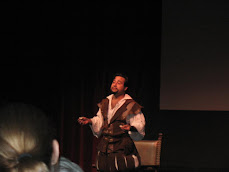
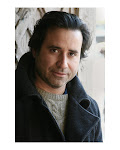
Chaz Mena is a man of passion. Whether it is creating roles for the stage and screen or spending time with family and friends, there is nothing this forty-one year old, Cuban-American actor does half way.

Chaz was born and raised in Miami, Florida where his earliest memories included scenes of his parents and grandparents telling each other stories of daily life in their long lost homeland of Cuba. Today, the population of South Florida is predominantly Spanish speaking. A large segment of the Hispanic population is Cuban-American. This is the exact opposite of the situation in the early Sixties. At the time, the first waves of Cuban exiles were literally lost in America. Chaz remembers "coming alive" when listening to the colorful stories his family members acted out on the front porch of their two story home in "Little Havana." In hindsight, Mena realizes that telling these stories in a theatrical style enabled his family members to reconnect with their history and culture. These childhood experiences and an innate drive to tell a story that creates a shared experience have made Chaz Mena the man he is today.

After completing an MFA in Drama at Carnegie Mellon University, Mena arrived back in Miami with eighty thousand dollars in debts from his undergraduate and graduate studies. Even worse, he didn't have a single lead or personal contact that might lead to gainful employment. It took a full week of sleeping in bed and the encouragement of wife Ileana before Mena was able to face the situation. He had been brought up to be a man of action rather than words. This led him to bravely pursue his childhood dream of becoming an actor without worrying about the consequences. Now, the first of many gut-wrenching reality checks Chaz Mena would have to learn to deal with waited unannounced on his doorstep.

By working odd jobs, Mena scraped together a nest egg of three thousand dollars. He set sail for New York City to establish himself as a legitimate, working actor. Chaz leased an apartment and began searching for an agent and acting roles. A few months later, Mena was penniless. All he had to show for his earnest efforts was a case of walking pneumonia. Then, serendipity or something akin to Divine Intervention changed Mena's fortunes. While auditioning for a stage role, Chaz met the manager of the Spanish Repertoire Theater. The manager, whose name was Gilberto, recognized Mena's family name. It turned out Gilberto had gone to college with Chaz's father. He liked the father and enjoyed having his son, who bore a striking resemblance to Gilberto's old college mate, around. "It made him feel young again," Mena explains. So Chaz became a regular member of the theater company, which gave him the opportunity to play as many as six roles at a time in classical and contemporary Spanish speaking plays written by Spanish playwrights. The Spanish Repertoire Theater was the vehicle that launched Mena's career. He began landing roles on TV and in Independent films. Mena was now living his dream as a respected and well-reviewed New York actor. Yet something was still missing.

Mena says he felt like "a fisherman constantly casting his line for roles with no real anchor. " It isn't hard to understand this statement since most actors live from role to role in their working life. One night, as Chaz was lamenting about the situation to his best friend Juan Carlos, something amazing happened. Instead of commiserating with Mena, Juan Carlos came up with an inspired idea. He knew Chaz had been, from early boyhood, a fan and avid reader of the work of Jose Marti, a 19th century Cuban Poet, Humanist, and Revolutionary. Juan Carlos suggested that Chaz write a one man play about Marti and act the role of the man whose ideas were instrumental in helping Cuba win independence from Spanish colonization. Chaz's response to his friend's idea might have been, "Are you kidding?" if not for the fact that Juan Carlos was a member of the Board of Directors of the Florida Humanities Council. All Chaz needed was his resume, some head shots, and of course, the play, Juan Carlos explained. He chose to ignore the fact that Chaz had never written anything for the stage or screen before in his life. Nevertheless, the next morning, Mena woke up with the first sentence of the play in his head: "Jose is still with us."

Nowadays, between stage and screen roles, Mena travels to colleges and universities to enact the one man show with the sponsorship of the Florida Humanities council. As part of the presentation, audience members can ask questions and hear a carefully researched answer from the actor who has brought a great historical figure and his ideas to life. Getting into character, Mena expresses a "Martiano" idea: "That which is beautiful is moral. That which is moral is beautiful.

Monday, November 3, 2008

Cuban hero a man of passion, action--Florida Today

BY LARRY JOHNSTON • ALWAYS LEARNING
MONDAY, NOVEMBER 3, 2008

For more than 45 years, the U.S. has had no diplomatic ties with Cuba. This is sad. It's as if ignoring something will make it go away. Here is a country only 90 miles away, and our government pretends it doesn't exist.
This is the type of logic we expect from a child. Have you ever tried to think something away? It doesn't work.
There is so much we don't know about Cuba. For example, can you name any one of its historic national heroes? Fidel Castro doesn't count.
I'll give you one: Jose Marti. You might say he was the Cuban equivalent of a Thomas Jefferson and Henry David Thoreau all in one.
Though he was born in 1853, I had the privilege of meeting and listening to the man as played by Mr. Chaz Mena. This engaging performance came courtesy of the Brevard Reading Festival. The year was 1891, and it was the day before an important speech to a group of Cuban exiles living in Ybor City near Tampa.
Mr. Marti practiced his speech before those of us in the audience. He asked us which phrases and inflections might be more convincing and effective.
We learned his fight for independence started early. He was jailed at 16 and spent two years in prison for treason. Following his release, he lived in France, Mexico and the U.S., picking up ideas and gathering important friends along the way.
He must have left quite an impression on the people of New York. They erected a statue of him on horseback in Central Park. It still is there. He must have left a pretty good impression on the citizens of Ybor City, because there is a bust of him there, too.
My brief encounter with the reincarnated Marti exposed me to a multifaceted man. He was a man of passion and action, who, together with everything else, wrote poetry and children's books. He told us about a teacher who taught him that verbs are the heart of sentences, not the adjectives. He realized the same is true of humankind. Our worth is measured by the actions we take, not how colorful we are.
Marti returned to Cuba to fight for his country. He died leading a raid against the Spanish in 1895. But Cuba did gain its independence eventually, though some may say only temporarily.
It was a pleasure meeting Mr. Marti through Mr. Mena. Mr. Marti left behind some words you may know. Let me quote a few of them.
"I am a sincere man from where the palm tree grows, and before dying I want to share the verses of my soul . . . With the poor people of the earth I want to share my fate. The brook of the mountains gives me more pleasure than the sea."
Sound familiar? It should. His words became the lyrics to the once very popular song by the Sandpipers called "Guantanamera." It also is the unofficial national anthem of Cuba.
Now you have no excuse for not remembering at least something about one of Cuba's national heroes. Of course, you will be humming that song for the rest of the day.
Try thinking it away and see how well it works. Then report your success to those in Washington who want to think away Cuba.
Johnston is a retired juvenile court judge who travels the country to see what he can discover, proving you're never too old to learn something new.

Thursday, October 2, 2008

American Stage

puts on Schennkan's

By the Waters of Babylon

Published 10.01.08
Courtesy American Stage
A POET WHO KNOWS IT: Chaz Mena (right) plays a Cuban exile who tries to heal Julie Rowe's emotional wounds in Robert Schenkkan's By the Waters of Babylon.

Let's call it the "Conjunction of Opposites" type of play: Two people who couldn't seem more different are thrown together by fate or law or need or accident, and come, after some difficulties, to respect and love one another. These plays come in the form of Visiting Mr. Green, Six Dance Lessons in Six Weeks, Educating Rita or, these days at American Stage, By the Waters of Babylon. The subtext of the play is idyllic and politically correct: Deep down we're all the same, plus we're wonderfully understanding, and anyway we need each other's help in order to heal our secret wounds. Who wouldn't be uplifted by such a play and such a message? So what if it's formulaic and even manipulative? Who'd be so churlish as to say that he or she wasn't uplifted -- or even moved?

Me. Liberal, soft-hearted, I-wish-things-were-this-simple me.

It's not that author Robert Schennkan doesn't know where our sympathies lie and how to jerk them around. Schennkan is an accomplished wordsmith whose dramaturgy is nearly flawless and who gives two talented actors -- in this case Julie Rowe and Chaz Mena -- the opportunity to play everything from gentle lyricism to violent madness in the course of two perfectly calibrated acts. But the whole problem of the play is that it's utterly transparent: We know so exactly what we're supposed to feel from moment to moment that it becomes impossible to feel it.

I'm glad to know that there are writers like Schennkan -- with the right values, with deep respect for women and immigrants. But it takes more than moral clarity to make a play work. If life were as manageable as this drama ultimately suggests, most of human history would never have happened.

By the Waters of Babylon is about Catherine, a widow, and Arturo, the Cuban man whom she employs one day as her gardener. Catherine, we learn, is being "shunned" by her neighbors as a "harpie" and "slut," for reasons that will ultimately become clear. Her late husband Edgar, she says early on, was a tight-fisted academic, possibly an alcoholic, and he died of a heart attack -- though she "jokes" at one point that she murdered him herself. Catherine's great regret is that she never had a child, that she miscarried the one time she was pregnant. As to her connection to Cuba, the only one she can think of is that her parents honeymooned there before Castro took over. Catherine is lonely and neurotic and just ready for some kind of relationship with Arturo. In a play this formulaic, it's inevitable that they'll connect.

Arturo is a little more interesting than his employer. He's a poet who found Cuban censorship just too hard to take, and on an impulse set out with a few other men on a fishing boat for what should have been a short journey to Florida. But the boat ran out of gas, the brief transit turned into a long nightmare, and now he has such a severe case of survivor's guilt, he can't bring himself to write another word. After establishing his equality with his American boss, he teaches her to dance (I found this whole sequence a cliché), how to make a mojito (lots of rum), and just maybe how to transcend certain terrible memories.

Most of all, though, Arturo is a stereotype: the romantic Latin with poetry in his soul, unafraid to cry openly, a born lover but temperamental. Arturo has a kind of grudging respect for "El Jefe" -- nobody in Cuba calls Castro by his name, he tells us -- and has a few fine moments utterly untouched by cliché, as when he defines Cuban music as the merging of the spirit of two groups of exiles, Spaniards and slaves (and his explanation of Che Guevara's continuing popularity in Cuba is brilliant and persuasive).

If you don't know what's coming for Catherine and Arturo, you haven't been watching much television or reading supermarket novels. The only really suspenseful question is: What'll happen to them afterward? Can a well-off Anglo woman find happiness with a Cuban day laborer? And can this laborer give her 20 years of psychotherapy in 10 minutes?

The acting is luminous even as the narrative fails, again and again, to rise above triteness. Mena as Arturo is a dream of good intentions and emotional availability, while the ever-dependable Rowe offers us an initially likable image of dotty loneliness, social insecurity and, ultimately, dangerous anger. Director Drew Fracher's skillful staging contains some moderately explicit moments (sexually and confessionally), and Jeffrey W. Dean's two sets give us a credible exterior and interior of Catherine's house. The last half or so of Act 2 is genuinely surprising -- which means things finally get interesting -- but no sooner has author Schennkan given Catherine a really serious, apparently intractable problem than he purports to solve it with some imaginative hocus-pocus. Not wanting to give anything away, I'll just say that if this solution works, then so should Sarah Palin's vast experience in geopolitics.

I didn't buy it. I don't think you will either. I think you'll walk away from the theater wondering, as I did, whether anybody actually went where this utterly manipulative drama tried to take them.

At least its heart is in the right place. That has some virtue. All that's missing is the mystery, the ambiguity and the messiness of artistic honesty.

Tuesday, July 8, 2008

Theatre Times (California Press)


Alexandros
by Melinda Lopez, directed by David Ellenstein World Premiere

Laguna Playhouse
• June 6-July 20, 2008 (Opened 6/6, rev’d 6/7)

WITH Saundra Santiago, Katharine Luckinbill, Maria Cellario, Chaz Mena, Kevin Symons PRODUCTION Marty Burnett, set; Julie Keen, costumes; Paulie Jenkins, lights; David Edwards, sound; Rebecca Michelle Green/Jennifer Ellen Butler, stage management. Commissioned by Laguna Playhouse

It takes some time to determine where Melinda Lopez is going in ‘Alexandros,’ the second of her Cuba-America bridge plays to play at the commissioning Laguna Playhouse (through June 29). Unfortunately, once we’re at our destination, even with a ‘come out, come out’ subplot that’s easier said in 2008 than done in the play’s Watergate-era setting, the package feels dull on arrival. Getting there, clearly intended to be more than half the fun, is an uneven ramble of farce, superficial character study, and stock characters. There’s the forgetful grandma, the extroverted but self-obsessed party-mom, and the quiet piano-student teen who harbors insights capable of unlocking the full potential of her older, inauthentic kin.

Lopez challenges director David Ellenstein to balance the serious messages of living honestly (which we ignore, as the excerpted resignation speech of President Nixon attests, at our peril) and the wacky doings of the oddly constructed characters. He achieves only mixed success. The best realized performance is that of Chaz Meña, vaguely invocative of some Andy Garcia - Ron Silver hybrid (not that weird a description when you consider this Latino has starred as Tevya). Whether he’s running around like a lost Marx brother or sincerely peeking out the closet door, Meña is not only believable but likable.

His scenes with Kevin Symons, who also rises above the material, are always engaging, which begs the question of why it is the men who fare better in a story largely about women by a woman. It may be that she has written them more simply, and objectively. The real women who Lopez has grown up with, and who are inescapably sources for her work, may present more important characteristics to wrestle into the work. The men are more simply drawn, and colored with more empathy.

The story centers around a reunion of sorts for a shrinking family of Cuban émigrés. (The play title is the family dog’s name, and points to the Greek showbiz persona one character adopted to hide his true ethnicity.) There are: Abuela (Maria Cellario), the forgetful grand dame whose memory is a convenience store for plot and playwright; her son, Tio (Meña); her daughter, Maritza (Saundra Santiago); and her granddaughter Marty (Katharine Luckenbill). Marty, named after Radio Marti, will honor her namesake as the play’s voice of freedom. The fifth wheel is Eric (Kevin Symons), the extra-familial and overly familiar gardener, whose only possible landscaping talent is back-hoeing.

Despite the appeal of the clarity given the male lovers’ story, it’s Lopez’ three generations of women who demand our attention. In the center is Maritza. The first question is, can her ten-year absence from her declining mother be excused, when it was only the distance between Texas and Florida separating them? As NASA’s Lisa Nowak proved, if you care enough, you can make that drive in no time.

Probably, because it was necessary for Marty to have become mature enough to make her assessments of the others as a semi-equal without them all being so inside each others’ lives so that there was no need for disclosures and revelations. But, for the plot to work, the logic of this family doesn’t. Not without there being some exculpatory dialogue. That would also be useful to make Maritza more likeable, especially challenging after we’ve come to realize that the only reason she has returned: she’s down to her last $4000 after the wheels have come off her second marriage. Her relationships with husbands, daughter, mother and brother are unclear, and it’s hard to keep sluicing through dialogue to mine greater definition when we have a demented grandma with psychic powers and her cruise entertainer son with the faux-gardener boyfriend making sure we don’t take things too seriously.

All these sins are forgivable if the comedy works. But on a set that often seems too big, with an emotional range in Luckenbill’s pivotal performance that seems too narrow, it mostly does not. Luckenbill needs to find a way to play glum and still invite us in.

One of the funniest bits, when characters communicate through a patio door using sign language to avoid detection, really works, and shows both the comedy and subtext about the silliness of deception. However, given the too-small door they must play through, it may be a directorial flourish that came after design meetings would have allowed Marty Burnett to opt for a wider door that would really let us enjoy it more.

Still, the message is a good one: Don’t hold back your true feelings. Be honest, forthright and don’t worry about what the others in the family are going to think. So, we have written our feelings in kind.

Wednesday, June 4, 2008

'Alexandros' is

fitfully successful

in Laguna Playhouse premiere

A new comedy about a dysfunctional Cuban-American family struggles with problems of tone but presents some memorable characters.

By PAUL HODGINS, The Orange County Register
Abuela appraises her 15-year-old her granddaughter Marty for the first time in a decade. "Enorme!" she says, marveling over how much the girl has grown.
"She says you're very beautiful," Marty's mom, Maritza, quickly adds.
That moment near the beginning of "Alexandros," a new play by Melinda Lopez making its world premiere at the Laguna Playhouse, nicely captures its themes. This dysfunctional Cuban-American family walks gingerly on a bed of lies, and Maritza's decision to leave her Miami clan and raise her girl in Texas has created a gulf between Abeula and Marty that a simple reunion won't solve. Their language barrier (Marty doesn't speak Spanish, and Abuela's English is limited) is only the beginning of the problem.
Lopez presents some thorny issues in this script, which was commissioned by the playhouse after positive response to its West Coast premiere of her play "Sonia Flew" last season. But the tone of intermittent farce punctuated by serious interludes isn't always a comfortable fit for the material. And Lopez' attempts to make this family's situation resonate with the bigger picture (it's the summer of 1974, and President Nixon is about to pay the ultimate price for his lies) isn't convincing.
"Sonia Flew," about the relocation of Cuban children in adoptive American homes after Castro's ascendancy, weaved together elements of Magic Realism and straight-ahead drama, and Lopez worked with assurance in that language. Lopez isn't as familiar with the mechanics of domestic dramedy, and at times "Alexandros" devolves into sitcom shallowness.
But at its best, the play achieves what I think Lopez set out to do: illuminate both the tragedy and comic absurdity of a family that copes with past traumas and present difficulties through denial and dissembling.
Maritza (Saundra Santiago) has been persuaded by her brother Tio (Chaz Mena) to travel from her Texas home to see her mother Abuela (Maria Cellario) in Miami. It's Abuela's 75th birthday, but she's in no mood to celebrate. "Welcome to my funeral," she announces to her shocked well-wishers.
The opening scene sets the tone. It begins in the dark, and chaos reigns. Alexandros, Abuela's ancient lap dog, bites Maritza when she tries to greet him. After the lights go up, the frenzy of hugs and kisses excludes Marty (Katharine Luckinbill), who stands near the door, suitcase in hand, looking like a stranger who's wandered into the wrong home. As Marty's sullen attitude and peace-symbol earrings hint, Maritza will soon be in for a couple years of full-blown teen 'tude and open rebellion.
To all appearances, they're a loving and successful family. Abuela lives in a '70s-stylish Miami home. Tio is a busy entertainer on cruise ships. Maritza, whose first husband died, is married to a wealthy Texas doctor, dresses like a well-kept woman and drives a Mercedes. Marty is thriving in an expensive music school, where she studies classical piano.
But all is not what it seems. Why didn't Martiza's husband tag along for the visit? Why did she drive all the way from Texas to Florida? Why does the gardener, an affable guy named Eric (Kevin Symons), insist on dropping in for the birthday celebrations? And why does Tio put on a cheesy Greek accent when he talks to Eric?
These questions and many others are answered in the course of this two-hour show. Along the way are moments of clever comedy, along with stretches of shtick that seem forced. In the second act, when things get more serious and the light of truth is finally shined on everyone, "Alexandros" gains gravitas and, not surprisingly, pulls us in.
Some actors seem more at ease with Lopez' hybrid tone than others.
Mena is well suited to this kind of script. He's an energetic performer who knows how to get a laugh out of manic pratfalls, but his serious scenes are persuasive, too. Santiago has her poignant moments, but seems less adept than Mena at switching from pathos to humor. Cellario plays an archetype – the loving matriarch whose warmth hides a backbone of steel – but brings humanity to the role.
As troubled Marty, Luckinbill's bag of tricks seems limited at first. There's more to seething teen angst than slumped shoulders and bad posture. But Marty is given more pivotal scenes in the second act, and Luckinbill rises to her character's demands when it counts.
Symons plays the story's least plausible character (for reasons that I can't reveal without spoiling the plot), but the actor's powers of charm somehow power through his character's obvious weaknesses.
David Ellenstein directs with a good feel for the dictates of physical comedy, although Marty Burnett's broad, smooth-flowing set presents problems with certain crucial bathroom scenes that even the most capable director couldn't solve. Julie Keen's costumes capture the glorious, colorful train wreck that was fashion in the '70s.
Though "Alexandros" is flawed, it shows promise. Lopez should keep writing in this vein – perhaps even about this clan. There's enough baggage here for five more plays, and I want to see the fireworks that result as new realities are dealt with and everyone endures a family's worst nightmare: a disgruntled and self-righteous teen.
Contact the writer: 714-796-7979 or phodgins@ocregister.com
In Melinda Lopez's comedy 'Alexandros,' a gathering of a Cuban American clan doesn't go as planned.
By David Ng, Los Angeles Times Staff Writer
June 2, 2008
If for no other reason, family reunions exist to give writers ample material for their stories of dinner-table dysfunctionality. There's nothing inherently wrong with that. Other people's domestic traumas have yielded some of theater's finest masterpieces.

Unfortunately, Melinda Lopez's "Alexandros" isn't one of them. This ensemble piece, having its world premiere at the Laguna Playhouse, is a family-reunion comedy that uses ethnic spice to enliven its reheated premise. A Cuban family living in Miami reunites to celebrate the 75th birthday of its matriarch (Maria Cellario). The party brings three generations together under one tempestuous (and pink-tiled) roof.

This occasionally funny play adheres to the family-reunion axiom that buried secrets must be revealed at the most awkward possible moments. The eldest daughter, Maritza (Saundra Santiago), is a vivacious society lady who doesn't want her family to know about her impending divorce from her wealthy husband. Her brother, Tio (Chaz Mena), is a cruise ship performer who prefers to keep his relationship with the family gardener (Kevin Symons) buried deep in the closet.

Emotional catharsis arrives courtesy of two unlikely interlopers. The old lady's lap dog, Alexandros (played by a stuffed animal), experiences a mysterious fate that throws the entire household into chaos. Meanwhile, the granddaughter, Marty, accidentally discovers her uncle's clandestine liaison and must do everything to keep herself from spilling the secret. She's played by Katharine Luckinbill, who is best known as the granddaughter of Lucille Ball and Desi Arnaz.

Perhaps appropriately, much of "Alexandros" plays like a 1950s sitcom. The characters are often pulling their faces into exaggerated expressions and constantly running around the set like a bunch of lunatics. The dialogue seems timed to match an imaginary laugh track. And the obligatory family-values lessons of the third act are dutifully reinforced.

The actual setting of the play is August 1974, on the eve of President Richard Nixon's resignation. The historical backdrop provides some convenient story parallels -- the toppling of authority, the outing of secrets and the beginning of a new era. It's a rather grandiose metaphor for such a modest play, but it does have the benefit of allowing the production team to indulge in garish '70s fashion, including bell-bottoms, big-collared shirts and fluorescent hot pants.

"Alexandros" contains some marvelously off-kilter scenes, most of them involving the flamboyant Tio. In one moment of stress, he performs an outrageously hammy rendition of Neil Diamond's "Sweet Caroline" on the family piano. Later, after much has been revealed, he childishly buries his face in a pillow for what seems like an eternity. Mena's wild but controlled performance turns a cliched role into something verging on experimental art.

The female cast members aren't nearly as successful with their parts, though that's mostly the fault of the playwright, who has created a gallery of stock Latinas. The grandmother is an overbearing matron obsessed with fortune telling, while her daughter is a hot-tempered firecracker who is always breaking out into cha-cha-cha dance moves. But worst of all is the granddaughter, a fully Americanized teenager who is predictably hostile to her ethnic relatives but then comes to embrace the value of her cultural heritage.

Directed by David Ellenstein, "Alexandros" is pitched as a screwball comedy, but the production's aim is slightly askew. The play teeters indecisively between outright frivolity and moments of psychological gravitas. "He was a lot of sad with his happy," says one character, and that line sums up the play's rather unbalanced tone of tragicomedy.

Lopez, whose "Sonia Flew" premiered last season at Laguna, knows how to juggle characters and write fast-paced scenes. But no amount of cleverness, or Latin exoticism for that matter, can conceal that she's essentially serving up leftovers.