Friday, June 12, 2009

St. Petersburg Times' Review of Tuesdays with Morrie

June 10: 'Tuesdays With Morrie'

at American Stage

through June 28

By John Fleming, Times Performing Arts Critic

Published Tuesday, June 9, 2009


I don't get it, I really don't. Tuesdays with Morrie — first the book, then the TV movie, now the play — has been this national phenomenon, with a message that is said to have changed peoples' lives. But judging from the current production by American Stage of the play, adapted by Jeffrey Hatcher from Mitch Albom's autobiographical book, the vaunted insights of Morrie Schwartz, the dying sociology professor whom Albom spent Tuesdays with, are little more than greeting-card homilies, conventional pieties on the meaning of life and death that you've heard a million times before.

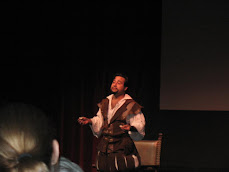
The problem is not the handsome production, directed by T. Scott Wooten, with Chaz Mena as Mitch, the Detroit sports writer, and Michael Edwards as Morrie, who is suffering from incurable ALS (amyotrophic lateral sclerosis), or Lou Gehrig's disease. (A popular disease in theater these days, it's also what Jane Fonda has as the dying Beethoven scholar she plays in 33 Variations on Broadway.) Mena and Edwards clearly enjoy each other's company, and that sense of camaraderie is crucial to the play and comes across loud and clear.

Mena is especially good as the driven, self-absorbed columnist on the make, filing stories from the Super Bowl, the Olympics, Wimbledon and the World Series, fending off calls from editors who want the copy now. His portrayal of Mitch's puppyish nostalgia for the carefree utopia of his college days at Brandeis, where he called his beloved mentor "Coach," is affectingly delusional.

Albom has turned death into something of a cottage industry (another of his bestsellers is The Five People You Meet in Heaven), and Morrie is his seminal expert on the subject. But the professor's pearls of wisdom tend to run along the lines of aphorisms like "As you age, you grow" or "It's hard to find your way in life." It's not exactly Samuel Beckett or even Neil Simon.

Edwards, a big, jovial presence, has the thankless task of playing a character who gets progressively weaker as the play goes on, and his death rattles are convincing. Still, Morrie remains remarkably lucid for someone who can't feed himself.

Tuesdays with Morrie is supposed to be about the elderly sage, but it is much more about Mitch and his sports writer's view of the world, in which every episode has a clear outcome, a neat little ending with a moral to the story. It's great stuff on the sports pages, not so great on stage.

There's one good thing about Tuesdays with Morrie, the first production in American Stage's new Raymond James Theatre. Albom's play just happened to be on the schedule when the company was able to move into its new home, and the play's popularity (the theater was full for Sunday's matinee) should introduce a lot of people to this splendid new space.

John Fleming can be reached at fleming@sptimes.com or (727) 893-8716. He blogs at Critics Circle at blogs.tampabay.com/arts.

Friday, April 24, 2009

Reverence guides actor's portrayal, Tampa Tribune, 24 April 2009

By JOSE PATINO GIRONA

Since age 6, Chaz Mena has revered Jose Marti, the 19th century Cuban patriot, poet, journalist and thinker. His Cuban-born grandfather gave him a book of Marti's writings for children and a picture book of the Cuban leader. He has kept the Cuban writer at a reachable distance from that first encounter. When he went to study theater in Russia, he took a book of Marti's writings to have a familiar companion. Two years ago, the Florida Humanities Council asked Mena, a New York-based actor, to perform a one-act play connecting Marti's work to Florida's history. He will perform "Charla, a Chat with Jose Marti," at 1 p.m. Saturday at the West Tampa Branch Library, 2312 W. Union St. Mena's Chautauqua performance begins when Marti came to Ybor City for one week in November 1891. The Cuban Workers Federation had invited Marti to speak and promote Cuban independence from Spain. After Mena completes his monologue, the performance turns into a question-and-answer session with the audience while Mena remains in character. In Marti, Mena found someone who easily empathized with others. "It is said that once you met Marti you were a different person from meeting him," Mena said. People were struck by Marti's loving and comforting approach, Mena said. He easily could focus and listen to people, he said. "He unapologetically tried to perfect his humanity," Mena said. "Those that give to others receive 10 times more." Mena said Marti's writings have changed him. It has pushed him to be more understanding, compassionate and loving to others, he said. It has also helped motivate him to learn about his family's homeland and to expand his intellect. Mena, 42, is no starving artist. He has a master's in fine arts degree from Carnegie-Mellon University. He has performed in plays throughout the country and appeared in films, television shows and commercials. He plays a recurring character in the television show "Law and Order." But Marti is a passion for him. About 10 years ago, his wife, Ileana Musa, encouraged him to write a play about Marti but other work got in the way. He said he performs the play because he sees a value in people learning about Marti and is moved when he receives comments from people saying they picked up Marti's writings after seeing his performance. He also wants people to see that Marti remains relevant. "We are at a crossroad in our American democracy," Mena said. "We need to decide which way to go. Marti was dealing with those issues in his day."

Saturday, March 14, 2009

Wednesday, March 11, 2009

Theater commentary: Miami mayor tale stands out at 1st Stage New Works Festival


By Hap Erstein


Fewer and fewer theaters these days devote themselves to producing new plays, as Florida Stage does, because they take nurturing and development, which is hard work.

But the Manalapan company has come up with a enterta
ining way to include its audience in the process with its 1st Stage New Works Festival. Now in its third year, the festival gave six new plays their initial public exposure and scrutiny over the course of two days — Monday and Tuesday of this week.

Beyond just allowing playwrights an opportunity to hear their plays read by some of South Florida’s best actors, Florida Stage has selected a couple of these scripts each year to produce fully in its following season. And from the quality of material at this year’s festival, it seems likely that such elevation to “next stage” status will continue.

I was able to attend the readings of four of the six scripts, and while none of them seemed fully formed or completely satisfying, most seemed very promising and within a draft or two of being ready for production.

Probably the most successful script was Miami resident Christopher Demos-Brown’s When the Sun Shone Brighter, though it was also one of the more conventional plays amid others that were interestingly experimental in form.

When the Sun Shone Brighter concerns a Cuban-American mayor of Miami-Dade County who is considering a run for the U.S. Senate, despite some skeletons in his closet, and trying to understand the politically motivated murder of his Cuban-exile father decades earlier.

Demos-Brown has a good ear for politico-speak as well as the ethnic rhythms of Miami. The play slips too far into the familiar ground of a police procedural drama, but the playwright’s overlapping dialogue helps elevate it beyond prosaic realism. In the festival, the presentation was also aided considerably by the crafty performance of Chaz Mena as Mayor Jose “Joe” Sanchez-Fors.

A familiar voice to Florida Stage audiences is playwright Carter W. Lewis, whose Golf with Alan Shepard, Women Who Steal and, just last season, Ordinary Nation, have been performed here. A writer of widely varying interest and styles, he was represented at 1st Stage by The Storytelling Ability of a Boy, a verbally nimble, triangular tale of two troubled teens and a young female teacher who tries to befriend them.

The play goes exactly where you think it is headed, towards a shooting incident, but it too avoids linear realism by weaving in and out of the literary efforts of Peck, the title boy, to the point where there is ambiguity as to what actually happens and what is inside Peck’s imagination. The compact, intermission-less play may be too focused on tee
nage angst to attract Florida Stage’s substantially older audience, but Carter captures the sullen expressions of the teens well and the script will surely be produced somewhere.

“Ambitious” is the word to describe 27-year-old Andrew Rosendorf’s three-act coming-of-age, family slice-of-life memory play, Levittown, or The Fall of the Lone Ranger. Rosendorf is the Emerging Playwright-in-Residence at Florida Stage through the National New Play Network and he is a writer to be reckoned with, even if his imaginative script overreaches and is overwritten.

It takes place in the 1950s in the waning days of the Golden Age of Radio, as the influence of television is about to arrive in the Edelman home in Westchester, N.Y. Fifteen-year-old Ronnie fancies himself a writer, as is his father, who works for a formerly popular radio comedy show. So while we observe the stresses of Ronnie’s bickering parents, his Hollywood-bound older sister and his Korean War-damaged brother, Ronnie envisions them all as characters in radio — sound effects included.

The play’s strength is in its dual levels of real life and radio life, and it becomes a lot less interesting when Rosendorf moves away from that idea in his naturalistic, sentimental third act. Nor does it help that Levittown has such strong echoes of Neil Simon’s Broadway Bound. Considerable more reworking is needed before the play is ready for production, but Rosendorf is a writer to keep an eye on.

Curiously, the effort of the most experienced playwright in the festival was the most disappointing. Veteran dramatist Israel Horowitz (The Indian Wants the Bronx, Park Your Car in Harvard Yard and some 68 other scripts), this year’s keynote speaker, was also represented by a new play, The P Word.

It is the story of a blue-collar New England family, the teenage daughter’s unexpected pregnancy and her mother’s parallel dilemma when her biological father comes back into her life, however briefly. The play was inspired by, but is only tangentially about, a “pregnancy pact” among 19 high school girls in Horovitz’s adopted town of Gloucester, Mass.

Centering the play on that pact, or at least a character who consciously wanted to become pregnant, would have taken the story beyond the
ordinary. Instead, it is about the evils of unprotected sex and the mistakes of mothers and daughters, and feels too familiar.

Although Horovitz is much smarter than The P Word comes across at this point — and he conceded after the reading that he has much more revision ahead — at the moment it feels like a television after school special.

If only the Horovitz who delivered a very personable, clever keynote speech about how the son (and grandson) of a truck driver grew up to be befriended by Samuel Beckett and become the most produced American playwright in France had been more evident in The P Word, the play would have been a lot more compelling. But at almost 70 years old, with as many plays to his credit, he probably is not far from writing another play. The P Word is one to stick in a drawer somewhere.

Cruelly, Florida Stage scheduled a new comedy called Sirens by one of its genuine finds, Deborah Zoe Laufer (The Last Schwartz, End Days), at 10 a.m. Tuesday, too early for me to get to. I also missed former actor and author of garden books Jack Staub’s Running Out.

Still, for the assembled new play fans that Florida Stage has amassed over the years, 1st Stage is a treasured part of the local theatrical landscape.

Friday, November 28, 2008

Tampa Tribune on BY THE WATERS OF BABYLON

'Waters of Babylon'

has great chemistry,

but formula's off

By John Fleming, Times performing arts critic
In print: Thursday, September 25, 2008

The story: Boy meets girl, except they've got more baggage than usual in By the Waters of Babylon, the two-person play by Robert Schenkkan that opens American Stage's 30th anniversary season. It's about the unlikely relationship between Catherine (Julie Rowe), the widow of an abusive college professor, and her gardener, Arturo (Chaz Mena), who turns out to be a novelist, exiled from Fidel Castro's Cuba because he wouldn't knuckle under to censorship.

Why we care: Schenkkan won the Pulitzer Prize for drama in 1992 for The Kentucky Cycle, an epic that calls for 20 actors and is rarely produced because of the expense of hiring them all. Babylon, set in Austin, Texas, and directed by Drew Fracher, is a chance to experience this important playwright's work on an intimate scale. Why we like it: Strong chemistry between Rowe and Mena energizes the opposites-attract scenario. She's got loads of screwball charm — "You know why Baptists don't have sex?" she asks. "It's too much like dancing!" — and he's got soulful speeches on the glories of Cuban music and mixes a killer mojito.

Why we don't: It's a bit too convenient that Arturo is such a cultivated fellow, a day laborer who just happens to be fluent in French and quotes Ernest Hemingway. And Catherine's transformation from wise-cracking ditz into psychotic whack job right out of Fatal Attraction strains credulity.

The sexy part: Woman winds up in bed with her gardener (or pool cleaner or cable guy): Babylon could be seen as a high-class homage to a million porn fantasies. The bedroom scene between Catherine and Arturo is pretty steamy. There was an audible gasp from the Sunday matinee audience when Mena dropped the purple sheet draped around him to flash some bare butt. Reminds us of: Terrence McNally's Frankie and Johnny in the Clair de Lune, another play about the developing relationship of two ordinary people, a short-order cook and a waitress.

Should you go? Sure, especially if you're interested in some gardening tips.

Tuesday, November 11, 2008

What is the best way of making money? HELIUM ONLINE MAGAZINE

by David Gittlin

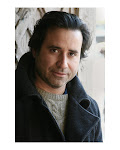
Chaz Mena is a man of passion. Whether it is creating roles for the stage and screen or spending time with family and friends, there is nothing this forty-one year old, Cuban-American actor does half way.

Chaz was born and raised in Miami, Florida where his earliest memories included scenes of his parents and grandparents telling each other stories of daily life in their long lost homeland of Cuba. Today, the population of South Florida is predominantly Spanish speaking. A large segment of the Hispanic population is Cuban-American. This is the exact opposite of the situation in the early Sixties. At the time, the first waves of Cuban exiles were literally lost in America. Chaz remembers "coming alive" when listening to the colorful stories his family members acted out on the front porch of their two story home in "Little Havana." In hindsight, Mena realizes that telling these stories in a theatrical style enabled his family members to reconnect with their history and culture. These childhood experiences and an innate drive to tell a story that creates a shared experience have made Chaz Mena the man he is today.

After completing an MFA in Drama at Carnegie Mellon University, Mena arrived back in Miami with eighty thousand dollars in debts from his undergraduate and graduate studies. Even worse, he didn't have a single lead or personal contact that might lead to gainful employment. It took a full week of sleeping in bed and the encouragement of wife Ileana before Mena was able to face the situation. He had been brought up to be a man of action rather than words. This led him to bravely pursue his childhood dream of becoming an actor without worrying about the consequences. Now, the first of many gut-wrenching reality checks Chaz Mena would have to learn to deal with waited unannounced on his doorstep.

By working odd jobs, Mena scraped together a nest egg of three thousand dollars. He set sail for New York City to establish himself as a legitimate, working actor. Chaz leased an apartment and began searching for an agent and acting roles. A few months later, Mena was penniless. All he had to show for his earnest efforts was a case of walking pneumonia. Then, serendipity or something akin to Divine Intervention changed Mena's fortunes. While auditioning for a stage role, Chaz met the manager of the Spanish Repertoire Theater. The manager, whose name was Gilberto, recognized Mena's family name. It turned out Gilberto had gone to college with Chaz's father. He liked the father and enjoyed having his son, who bore a striking resemblance to Gilberto's old college mate, around. "It made him feel young again," Mena explains. So Chaz became a regular member of the theater company, which gave him the opportunity to play as many as six roles at a time in classical and contemporary Spanish speaking plays written by Spanish playwrights. The Spanish Repertoire Theater was the vehicle that launched Mena's career. He began landing roles on TV and in Independent films. Mena was now living his dream as a respected and well-reviewed New York actor. Yet something was still missing.

Mena says he felt like "a fisherman constantly casting his line for roles with no real anchor. " It isn't hard to understand this statement since most actors live from role to role in their working life. One night, as Chaz was lamenting about the situation to his best friend Juan Carlos, something amazing happened. Instead of commiserating with Mena, Juan Carlos came up with an inspired idea. He knew Chaz had been, from early boyhood, a fan and avid reader of the work of Jose Marti, a 19th century Cuban Poet, Humanist, and Revolutionary. Juan Carlos suggested that Chaz write a one man play about Marti and act the role of the man whose ideas were instrumental in helping Cuba win independence from Spanish colonization. Chaz's response to his friend's idea might have been, "Are you kidding?" if not for the fact that Juan Carlos was a member of the Board of Directors of the Florida Humanities Council. All Chaz needed was his resume, some head shots, and of course, the play, Juan Carlos explained. He chose to ignore the fact that Chaz had never written anything for the stage or screen before in his life. Nevertheless, the next morning, Mena woke up with the first sentence of the play in his head: "Jose is still with us."

Nowadays, between stage and screen roles, Mena travels to colleges and universities to enact the one man show with the sponsorship of the Florida Humanities council. As part of the presentation, audience members can ask questions and hear a carefully researched answer from the actor who has brought a great historical figure and his ideas to life. Getting into character, Mena expresses a "Martiano" idea: "That which is beautiful is moral. That which is moral is beautiful.

Monday, November 3, 2008

Cuban hero a man of passion, action--Florida Today

BY LARRY JOHNSTON • ALWAYS LEARNING
MONDAY, NOVEMBER 3, 2008

For more than 45 years, the U.S. has had no diplomatic ties with Cuba. This is sad. It's as if ignoring something will make it go away. Here is a country only 90 miles away, and our government pretends it doesn't exist.
This is the type of logic we expect from a child. Have you ever tried to think something away? It doesn't work.
There is so much we don't know about Cuba. For example, can you name any one of its historic national heroes? Fidel Castro doesn't count.
I'll give you one: Jose Marti. You might say he was the Cuban equivalent of a Thomas Jefferson and Henry David Thoreau all in one.
Though he was born in 1853, I had the privilege of meeting and listening to the man as played by Mr. Chaz Mena. This engaging performance came courtesy of the Brevard Reading Festival. The year was 1891, and it was the day before an important speech to a group of Cuban exiles living in Ybor City near Tampa.
Mr. Marti practiced his speech before those of us in the audience. He asked us which phrases and inflections might be more convincing and effective.
We learned his fight for independence started early. He was jailed at 16 and spent two years in prison for treason. Following his release, he lived in France, Mexico and the U.S., picking up ideas and gathering important friends along the way.
He must have left quite an impression on the people of New York. They erected a statue of him on horseback in Central Park. It still is there. He must have left a pretty good impression on the citizens of Ybor City, because there is a bust of him there, too.
My brief encounter with the reincarnated Marti exposed me to a multifaceted man. He was a man of passion and action, who, together with everything else, wrote poetry and children's books. He told us about a teacher who taught him that verbs are the heart of sentences, not the adjectives. He realized the same is true of humankind. Our worth is measured by the actions we take, not how colorful we are.
Marti returned to Cuba to fight for his country. He died leading a raid against the Spanish in 1895. But Cuba did gain its independence eventually, though some may say only temporarily.
It was a pleasure meeting Mr. Marti through Mr. Mena. Mr. Marti left behind some words you may know. Let me quote a few of them.
"I am a sincere man from where the palm tree grows, and before dying I want to share the verses of my soul . . . With the poor people of the earth I want to share my fate. The brook of the mountains gives me more pleasure than the sea."
Sound familiar? It should. His words became the lyrics to the once very popular song by the Sandpipers called "Guantanamera." It also is the unofficial national anthem of Cuba.
Now you have no excuse for not remembering at least something about one of Cuba's national heroes. Of course, you will be humming that song for the rest of the day.
Try thinking it away and see how well it works. Then report your success to those in Washington who want to think away Cuba.
Johnston is a retired juvenile court judge who travels the country to see what he can discover, proving you're never too old to learn something new.

Thursday, October 2, 2008

American Stage

puts on Schennkan's

By the Waters of Babylon

Published 10.01.08
Courtesy American Stage
A POET WHO KNOWS IT: Chaz Mena (right) plays a Cuban exile who tries to heal Julie Rowe's emotional wounds in Robert Schenkkan's By the Waters of Babylon.

Let's call it the "Conjunction of Opposites" type of play: Two people who couldn't seem more different are thrown together by fate or law or need or accident, and come, after some difficulties, to respect and love one another. These plays come in the form of Visiting Mr. Green, Six Dance Lessons in Six Weeks, Educating Rita or, these days at American Stage, By the Waters of Babylon. The subtext of the play is idyllic and politically correct: Deep down we're all the same, plus we're wonderfully understanding, and anyway we need each other's help in order to heal our secret wounds. Who wouldn't be uplifted by such a play and such a message? So what if it's formulaic and even manipulative? Who'd be so churlish as to say that he or she wasn't uplifted -- or even moved?

Me. Liberal, soft-hearted, I-wish-things-were-this-simple me.

It's not that author Robert Schennkan doesn't know where our sympathies lie and how to jerk them around. Schennkan is an accomplished wordsmith whose dramaturgy is nearly flawless and who gives two talented actors -- in this case Julie Rowe and Chaz Mena -- the opportunity to play everything from gentle lyricism to violent madness in the course of two perfectly calibrated acts. But the whole problem of the play is that it's utterly transparent: We know so exactly what we're supposed to feel from moment to moment that it becomes impossible to feel it.

I'm glad to know that there are writers like Schennkan -- with the right values, with deep respect for women and immigrants. But it takes more than moral clarity to make a play work. If life were as manageable as this drama ultimately suggests, most of human history would never have happened.

By the Waters of Babylon is about Catherine, a widow, and Arturo, the Cuban man whom she employs one day as her gardener. Catherine, we learn, is being "shunned" by her neighbors as a "harpie" and "slut," for reasons that will ultimately become clear. Her late husband Edgar, she says early on, was a tight-fisted academic, possibly an alcoholic, and he died of a heart attack -- though she "jokes" at one point that she murdered him herself. Catherine's great regret is that she never had a child, that she miscarried the one time she was pregnant. As to her connection to Cuba, the only one she can think of is that her parents honeymooned there before Castro took over. Catherine is lonely and neurotic and just ready for some kind of relationship with Arturo. In a play this formulaic, it's inevitable that they'll connect.

Arturo is a little more interesting than his employer. He's a poet who found Cuban censorship just too hard to take, and on an impulse set out with a few other men on a fishing boat for what should have been a short journey to Florida. But the boat ran out of gas, the brief transit turned into a long nightmare, and now he has such a severe case of survivor's guilt, he can't bring himself to write another word. After establishing his equality with his American boss, he teaches her to dance (I found this whole sequence a cliché), how to make a mojito (lots of rum), and just maybe how to transcend certain terrible memories.

Most of all, though, Arturo is a stereotype: the romantic Latin with poetry in his soul, unafraid to cry openly, a born lover but temperamental. Arturo has a kind of grudging respect for "El Jefe" -- nobody in Cuba calls Castro by his name, he tells us -- and has a few fine moments utterly untouched by cliché, as when he defines Cuban music as the merging of the spirit of two groups of exiles, Spaniards and slaves (and his explanation of Che Guevara's continuing popularity in Cuba is brilliant and persuasive).

If you don't know what's coming for Catherine and Arturo, you haven't been watching much television or reading supermarket novels. The only really suspenseful question is: What'll happen to them afterward? Can a well-off Anglo woman find happiness with a Cuban day laborer? And can this laborer give her 20 years of psychotherapy in 10 minutes?

The acting is luminous even as the narrative fails, again and again, to rise above triteness. Mena as Arturo is a dream of good intentions and emotional availability, while the ever-dependable Rowe offers us an initially likable image of dotty loneliness, social insecurity and, ultimately, dangerous anger. Director Drew Fracher's skillful staging contains some moderately explicit moments (sexually and confessionally), and Jeffrey W. Dean's two sets give us a credible exterior and interior of Catherine's house. The last half or so of Act 2 is genuinely surprising -- which means things finally get interesting -- but no sooner has author Schennkan given Catherine a really serious, apparently intractable problem than he purports to solve it with some imaginative hocus-pocus. Not wanting to give anything away, I'll just say that if this solution works, then so should Sarah Palin's vast experience in geopolitics.

I didn't buy it. I don't think you will either. I think you'll walk away from the theater wondering, as I did, whether anybody actually went where this utterly manipulative drama tried to take them.

At least its heart is in the right place. That has some virtue. All that's missing is the mystery, the ambiguity and the messiness of artistic honesty.